
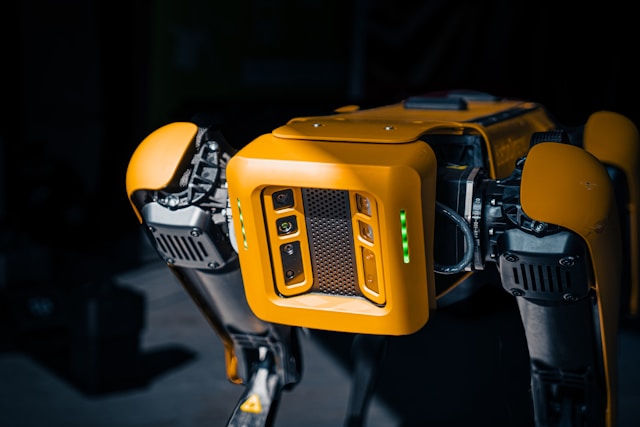
In the fast-paced realm of technology, artificial intelligence (AI) stands as a beacon of innovation, continually reshaping the landscape of our digital world. As we navigate through the present, it’s essential to cast our gaze towards the horizon and ponder the future of AI – a future that holds boundless possibilities and transformative potential.
The Current State of AI
To comprehend the trajectory of AI, we must first acknowledge its current state. AI has permeated various facets of our lives, from voice-activated assistants and recommendation algorithms to advanced machine learning models. Its ability to analyze vast datasets and derive meaningful insights has revolutionized industries, ranging from healthcare and finance to education and entertainment.
The Evolutionary Leap
As we stand at the cusp of a new era, the evolution of AI is poised to take a monumental leap forward. Innovations such as quantum computing, neural network advancements, and the integration of AI with other emerging technologies are set to redefine the boundaries of what AI can achieve. These developments promise not only enhanced performance and efficiency but also the potential to solve complex problems that were once deemed insurmountable.
Ethical Considerations in AI
However, the inexorable march of AI progress also raises crucial ethical considerations. As AI systems become more sophisticated, questions surrounding transparency, accountability, and bias come to the forefront. Striking the right balance between innovation and ethical responsibility is paramount to ensure that AI benefits humanity as a whole without inadvertently perpetuating inequalities or ethical lapses.
AI and Society
The future of AI is intrinsically linked to its societal impact. How will AI shape the job market? What role will it play in education, healthcare, and governance? Addressing these questions requires a collaborative effort between technologists, policymakers, and the public to steer the development of AI in a direction that aligns with our collective values and aspirations.
Bridging the Gap Between Humans and AI
One of the most intriguing prospects of the future of AI is the potential for a seamless integration between humans and intelligent machines. The convergence of AI with augmented reality, virtual reality, and brain-computer interfaces opens doors to new modes of communication and interaction. This synergy between humans and AI could lead to unprecedented advancements in fields such as medicine, education, and personal assistance.
The Road Ahead
As we embark on this journey into the future of AI, it is imperative to approach it with a combination of enthusiasm and prudence. Technological progress should be guided by a commitment to inclusivity, ethical principles, and a clear understanding of the potential consequences. The road ahead is both thrilling and challenging, requiring a collective effort to harness the power of AI for the greater good.
In conclusion, the future of AI holds immense promise, but its realization requires a thoughtful and deliberate approach. By navigating the path with ethical considerations at the forefront, we can ensure that AI becomes a force for positive transformation, enriching our lives and shaping a future that benefits all of humanity.
huere geil